MicronCube Store

Precision Microneedle Molds for Research and Development

Precision microneedle molds.
Supporting your journey from research to product development.

Scroll to About
About MicronCube

MicronCube Basic Logo MicronCube Needle Logo

MicronCube develops microneedle solutions for research and pharmaceutical R&D.

Built on over a decade of microneedle research, we empower research and pharmaceutical innovation, helping turn new ideas into better microneedle-enabled drug delivery technologies.


10+ Years Experience

Challenges to address

The limits of conventional microneedle molding

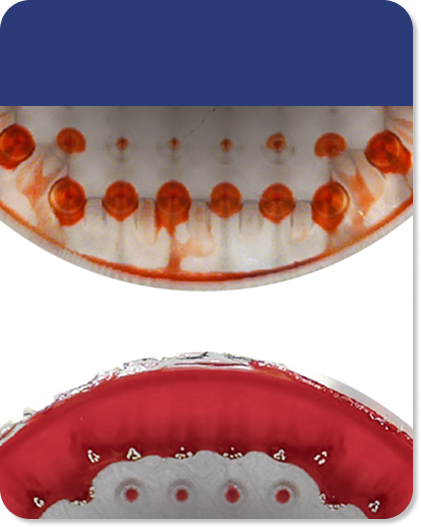
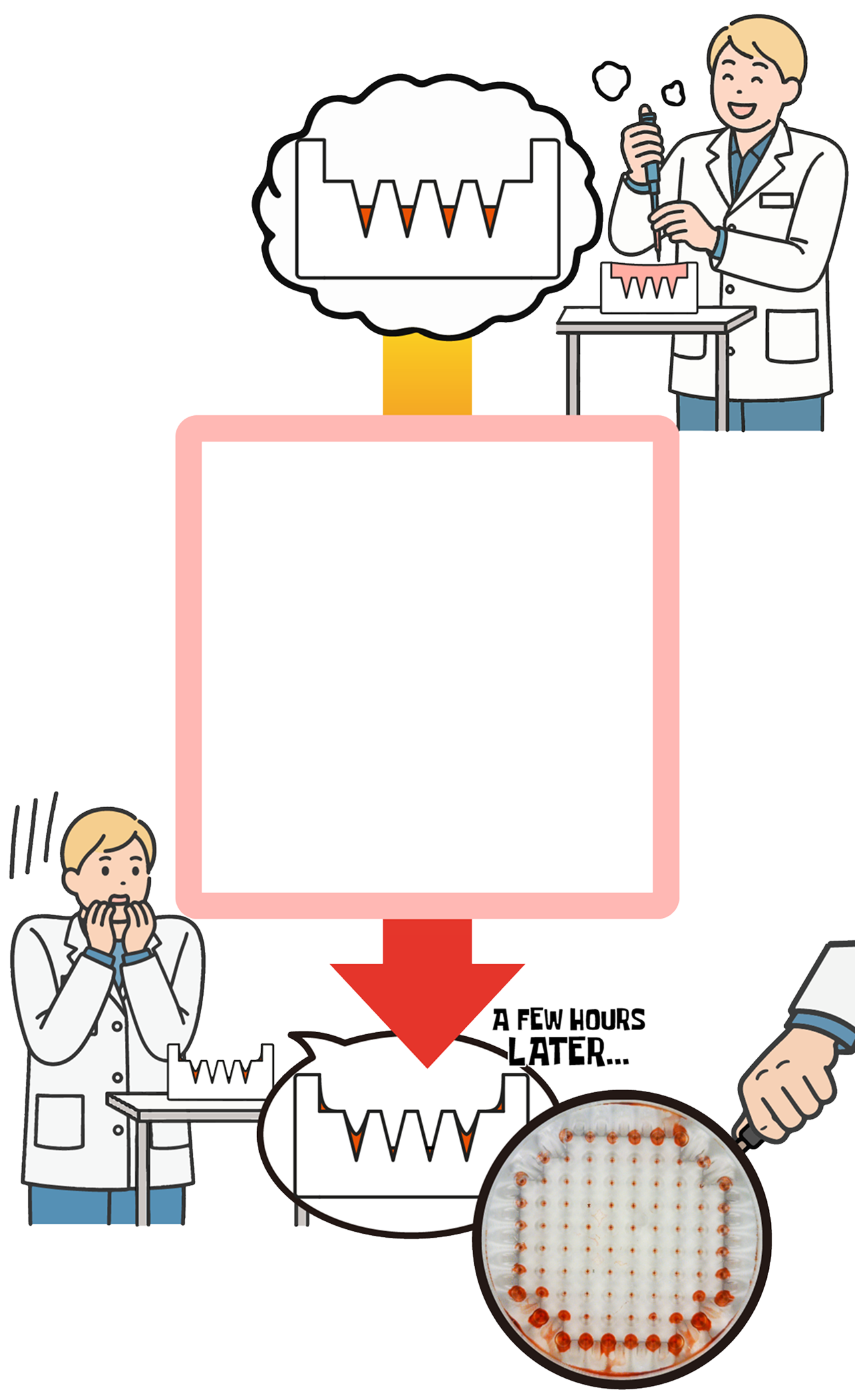
Dissolving microneedle patches are made by filling mold cavities with a drug formulation, followed by drying. Conventional mold designs, however, can lead to inefficient filling and formulation loss.

Watch the microneedle patch form on the mold as it dries.(Top view)
Pain Point
Play
기본 재생 속도
Change speed
Timer Timer Hand

Click the video inside the box to play.

  • Time-lapse optical microscopy captures the patch-drying process from above.
  • A flat-surface mold was filled with Allura Red (20 μg, model compound),
    polyvinyl alcohol (PVA), sucrose, and other excipients (220 μg total), then dried at <20% RH.
  • Results may vary with formulation, concentration and drying conditions.
CHECK POINT

What limits drug loading in conventional flat-surface molds?
Drug distribution in conventional microneedle molding Drug loss during microneedle molding Microneedle cavity filling efficiency

Uneven drug distribution

Marangoni flow and surface tension drive liquid toward the edges, leaving unequal amounts in individual needles.

Drug loss from sidewall pooling

Sharp corners promote pooling at patch edges, resulting in substantial formulation loss from the sidewalls.

Limited drug loading in MNs

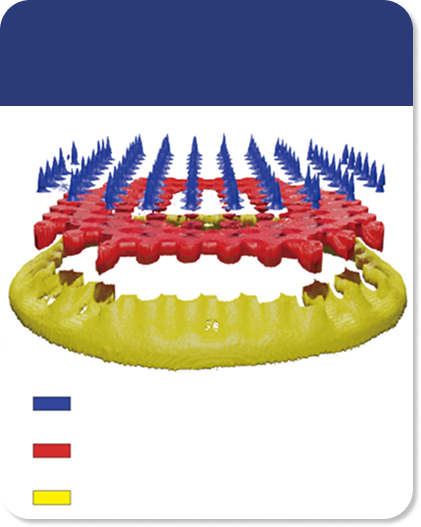
With a concentrated drug solution, only ~10% of the drug volume is in the needles (confocal 3D reconstruction).

30–70% of total drug in the sidewall

Site 1
Site 2
Microneedles: <10% of total volume
Baseplates: ~50% of total volume
Sidewalls: ~45% of total volume
With one-step microneedle patch fabrication, only about 10% of the active ingredient was recovered in the microneedles.*
Highlight

*Vander Straeten, A., et al. (2023). A microneedle vaccine printer for thermostable COVID-19 mRNA vaccines. Nature Biotechnology.

These issues can raise production costs, reduce drug utilization and affect delivery consistency—challenges for microneedle R&D, regulatory approval and manufacturing.

How have these issues been addressed?

Approaches used in research and industry include:

  • Removing the drug-containing layer at the patch edges.
  • Filling only the needle cavities through controlled dispensing: removing excess solution outside the needles, or dispensing very small volumes into each cavity.
  • Using mold-free fabrication methods, such as drawing lithography.

These approaches can add process complexity
or require specialized equipment.

Scientist

Why MicronCube?

A solution inspired by nature

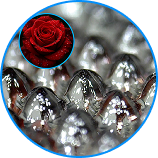
MicronCube developed UniCaptiX™ technology, inspired by the microstructure of rose petals, to address key challenges of conventional microneedle molding.

The mold architecture guides the drug formulation toward the microneedle cavities while maintaining liquid continuity between cavities, thereby promoting more uniform filling across microneedle array.


Conventional
Flat-surface mold
UniCaptiX™ technology
applied mold
Microneedle mold architecture with UniCaptiX technology Rose-petal surface microstructure inspiring UniCaptiX mold design
Substantial drug loss outside the MNs array
and uneven loading across the array.
A bioinspired structure can improve drug loading efficiency
and promotes uniform loading across MN array.
Conventional mold
UniCaptiX mold
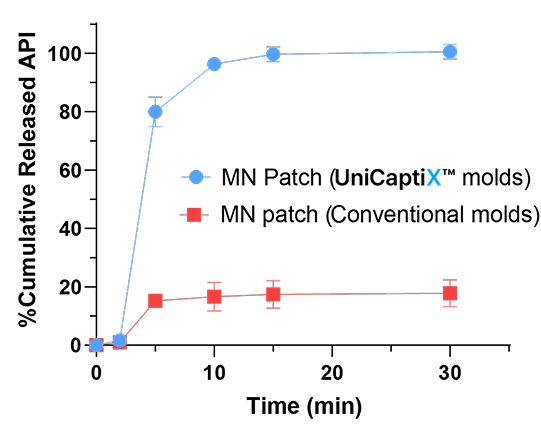
Cumulative drug release*
(% of total drug content)
17%
100%

UniCaptiX

Technology

Explore the design behind UniCaptiX technology.
Bioinspired surface geometry for microneedle mold filling
Controlled surface wetting of the microneedle mold
Fluid continuity between neighboring microneedle cavities

Fluid continuity between cavities
promotes more uniform filling across the array

Bioinspired surface geometry promotes
formulation retention around MN cavities

Controlled wetting helps
reduce sidewall pooling
생체 모방 기술로 약액이 균일하고, 효율적으로 채워지는 똑똑한 몰드
MicronCube는 첨단 마이크로니들 몰드 플랫폼을 기반으로,
당신의 혁신적인 아이디어가 성과로 이어질 수 있도록 함께하겠습니다.
UniCaptiX microneedle mold technology
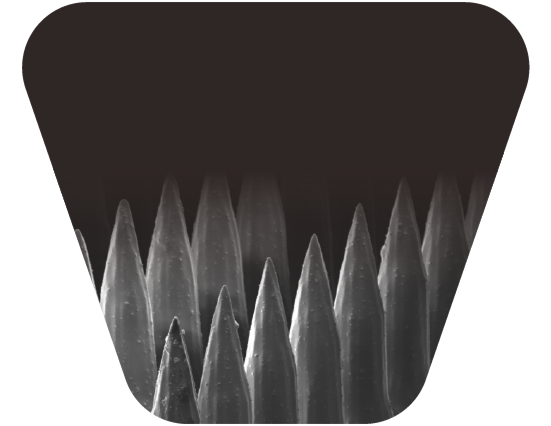
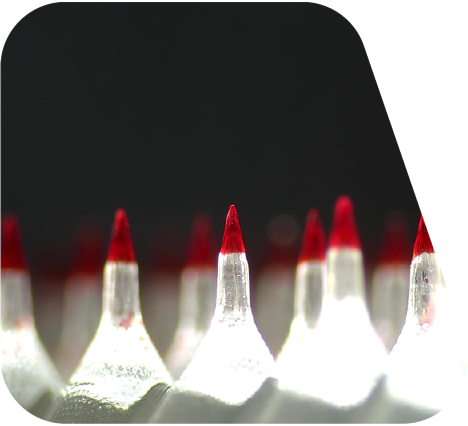
Precision microneedle template
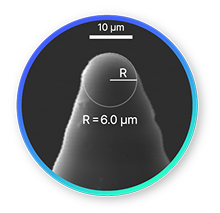
Magnified microneedle tip
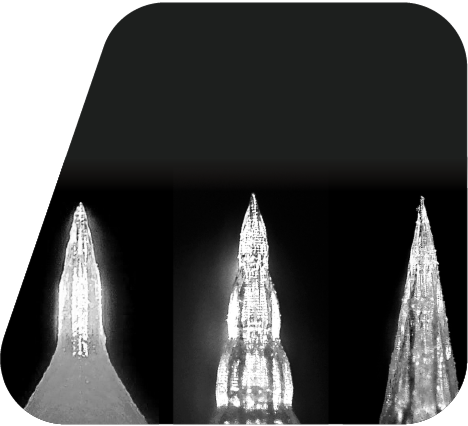
Custom microneedle mold geometry
Custom microneedle mold design
1
2
3
UniCaptiX
Uniform & efficient
Precise, consistent
microneedle geometry
Your design.
Your custom mold.
Bioinspired mold design minimizes costly drug loss and simplifies patch fabrication using standard laboratory equipment.
Reproducible templates with tip radii <10 μm and
needle dimensions within ±10% of specifications
Tailor needle shape, width, height and spacing to your needs, with or without UniCaptiX™ technology.
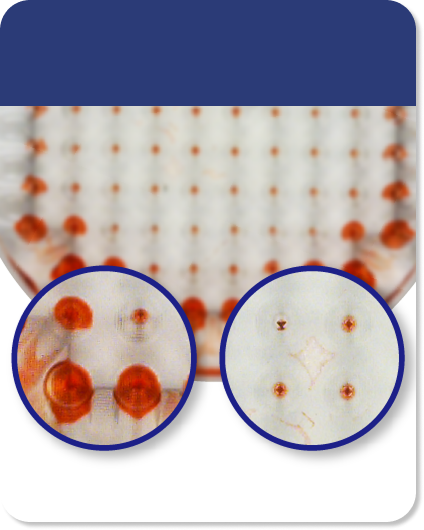
기존 몰드와 차이를 눈으로 직접 비교해보세요
  • Molds differed in geometry but were otherwise prepared using the same method.
  • Time-lapse videos show drying under identical formulation, concentration, and volume conditions.
  • Both used the same PVA/sucrose formulation with red dye as a model compound.
  • Drug distribution depends on formulation, concentration and drying conditions. Scale bar: 2 mm.
  • Representative results shown for demonstration purposes.
Comparative mold performance
(In vitro drug release study using DNA-loaded MN patches)
  • Microneedle patches were prepared using each mold under identical manufacturing conditions.
  • *Values represent plateau-phase drug release as a percentage of total drug content.
  • Performance may vary with formulation, manufacturing conditions and other factors.
  • Results are representative of the tested conditions with the M12U microneedle mold.
Click to play the comparison
기본 재생 속도

Top-view comparison of two molds during formulation drying.
Red indicates the drug-containing formulation.

Your next
microneedle patch starts here.

See how a microneedle patch takes shape, from mold to patch.
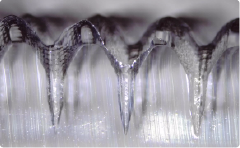
  1. Microneedle mold cross-section

    01 Mold

    Cross-section of a precision mold with bioinspired design
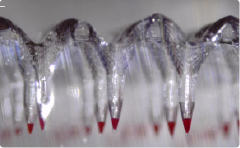
  2. Mold after casting and drying

    02 Cast & dry

    Model formulation cast into the needle cavities.
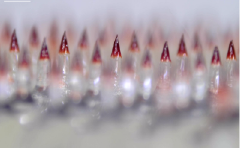
  3. Demolded microneedle patch

    03 Demold

    The finished microneedle patch

Microneedle patch fabrication

Product Lineup

Order these products from the MicronCube Store.

Online store: Korea only · International orders: Contact Us

MicronCube Store

Explore the store · Orders within Korea
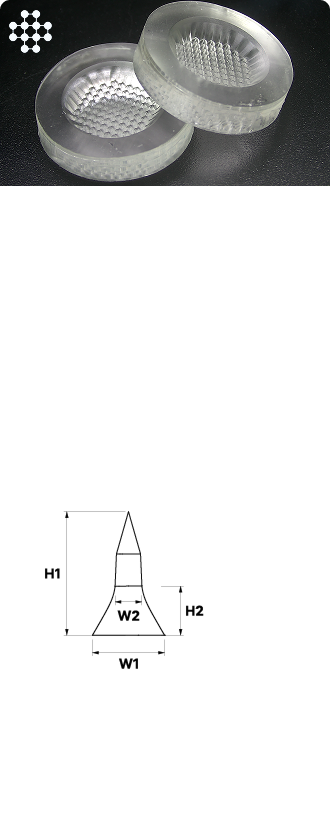
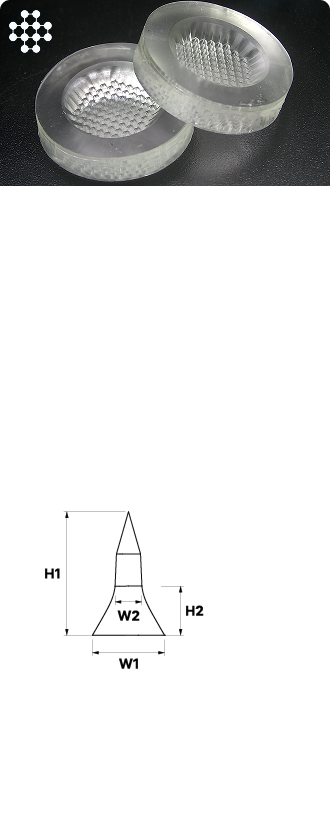
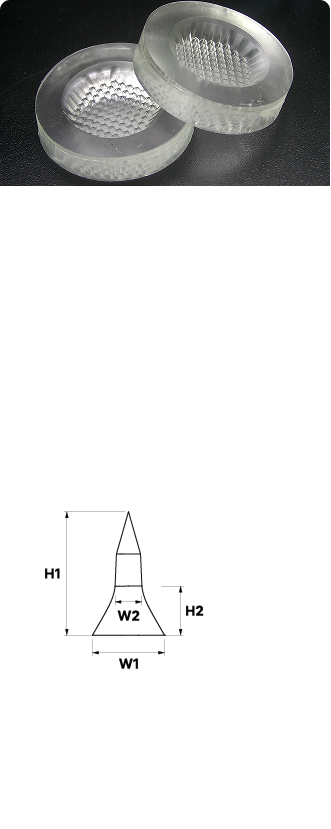
M12U M-cube MicronSpace™Microneedle(MN) Molds microneedle mold
M12U
M-cube MicronSpace™
Microneedle(MN) Molds
1200 μm Height, 8ea/pk
  • With UniCaptiX™ technology
  • 88-needle array
  • 1000 μm needle spacing
  • Bullet-shaped needles
H1, Full height : 1200 µm
H2, Support height : 430 µm
W1, Base width : 700 µm
W2, Support top width : 240 µm
M10U M-cube MicronSpace™Microneedle(MN) Molds microneedle mold
M10U
M-cube MicronSpace™
Microneedle(MN) Molds
1000 μm Height, 8ea/pk
  • With UniCaptiX™ technology
  • 88-needle array
  • 1000 μm needle spacing
  • Bullet-shaped needles
H1, Full height : 1000 µm
H2, Support height : 340 µm
W1, Base width : 700 µm
W2, Support top width : 230 µm
M08U M-cube MicronSpace™Microneedle(MN) Molds microneedle mold
M08U
M-cube MicronSpace™
Microneedle(MN) Molds
800 μm Height, 8ea/pk
  • With UniCaptiX™ technology
  • 88-needle array
  • 1000 μm needle spacing
  • Bullet-shaped needles
H1, Full height : 800 µm
H2, Support height : 240 µm
W1, Base width : 700 µm
W2, Support top width : 220 µm
M06U M-cube MicronSpace™Microneedle(MN) Molds microneedle mold
M06U
M-cube MicronSpace™
Microneedle(MN) Molds
600 μm Height, 8ea/pk
  • With UniCaptiX™ technology
  • 88-needle array
  • 1000 μm needle spacing
  • Bullet-shaped needles
H1, Full height : 600 µm
H2, Support height : 160 µm
W1, Base width : 700 µm
W2, Support top width : 190 µm
M08P Plain Microneedle Molds microneedle mold
M08P
Plain Microneedle Molds
800 μm Height, 8ea/pk
  • Without UniCaptiX™ technology
  • 88-needle array
  • 1000 μm needle spacing
  • Bullet-shaped needles
H1, Full height : 800 µm
H2, Support height : 240 µm
W1, Base width : 700 µm
W2, Support top width : 220 µm

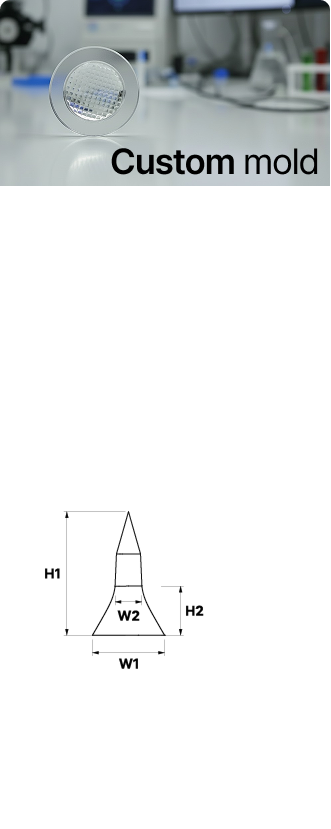
Custom microneedle molds, shaped around your research

Custom Microneedle Molds

Explore your design in Warp Studio™, then request a custom mold.

ShapeMicroneedleArrayBaseplate

Contact MicronCube

Contact Image
Room 523, College of Pharmacy, Building 28
Gyeongsang National University, 501 Jinju-daero
Jinju-si, Gyeongsangnam-do 52828, Republic of Korea
info@microncube.com

MicronCube collects and uses the following information to respond to inquiries (Personal Information Protection Act, Article 15(1), items 4 and 6).
  • Purpose: responding to inquiries and maintaining inquiry records
  • Information: affiliation, name, phone number, email and message
  • Retention: up to 2 years from submission
한국어