Precision Microneedle Molds for Research and Development
Precision microneedle molds.
Supporting your journey from research to product development.
Scroll to About

Precision microneedle molds.
Supporting your journey from research to product development.

MicronCube develops microneedle solutions for research and pharmaceutical R&D.
Built on over a decade of microneedle research, we empower research and pharmaceutical innovation, helping turn new ideas into better microneedle-enabled drug delivery technologies.


Challenges to address
Dissolving microneedle patches are made by filling mold cavities with a drug formulation, followed by drying. Conventional mold designs, however, can lead to inefficient filling and formulation loss.
Watch the microneedle patch form on the mold as it dries.(Top view)
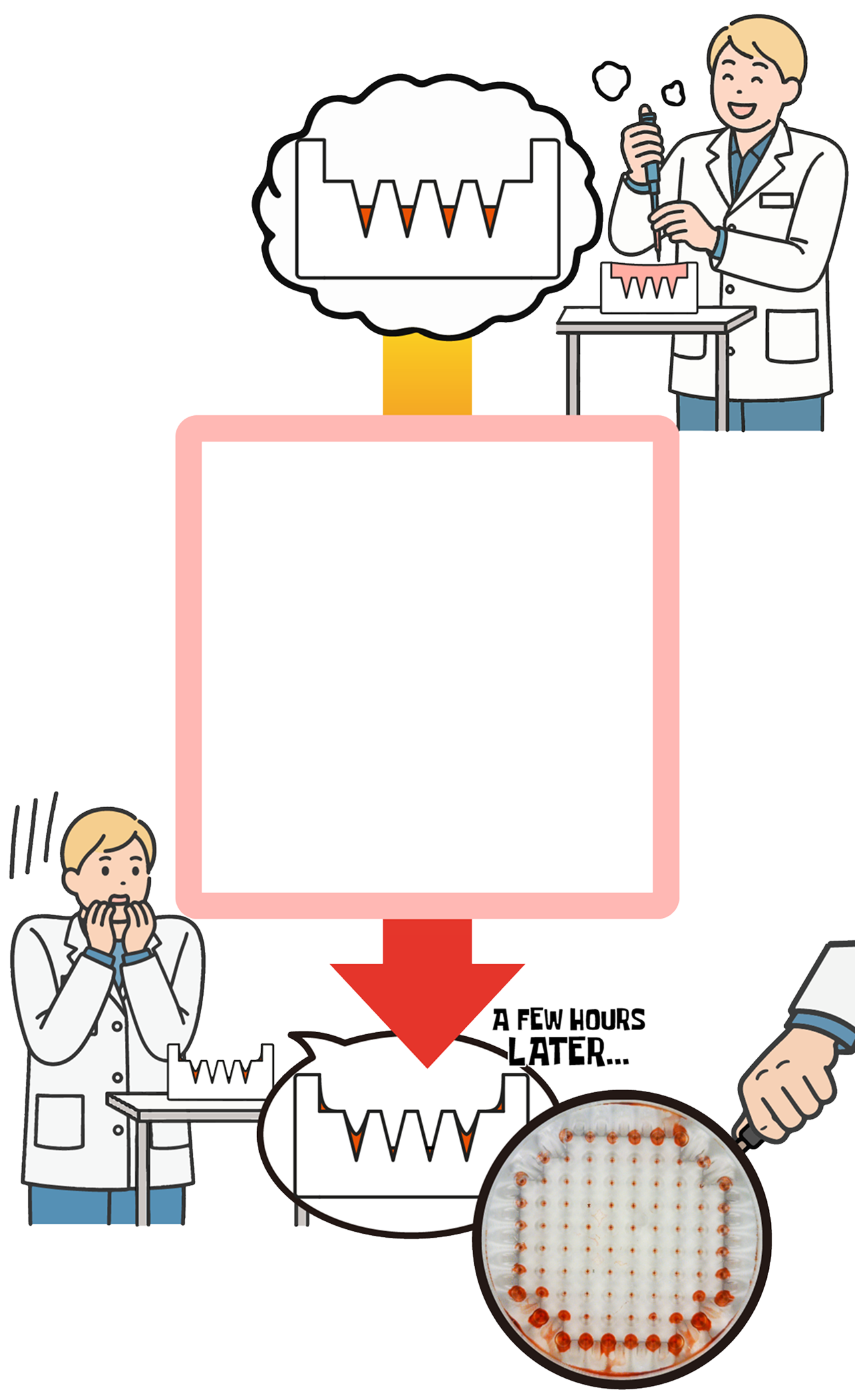


Click the video inside the box to play.
What limits drug loading in conventional flat-surface molds?
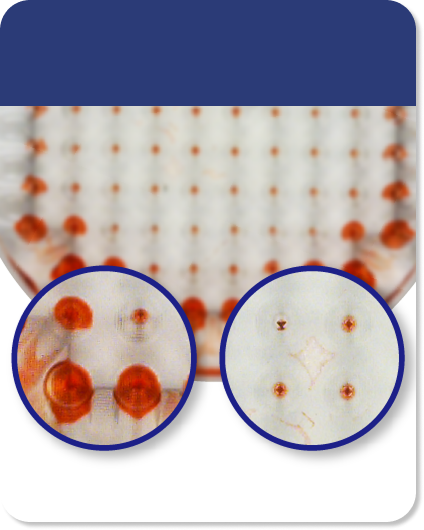
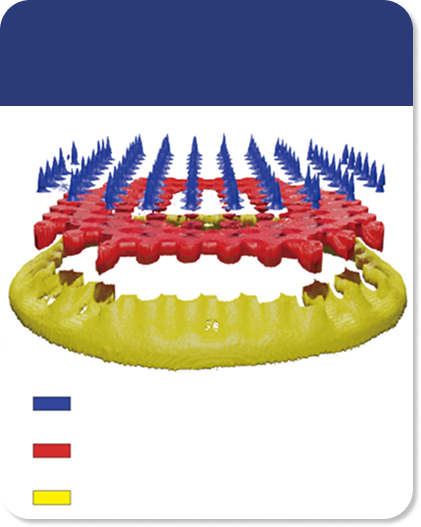
Uneven drug distribution
Marangoni flow and surface tension drive liquid toward the edges, leaving unequal amounts in individual needles.
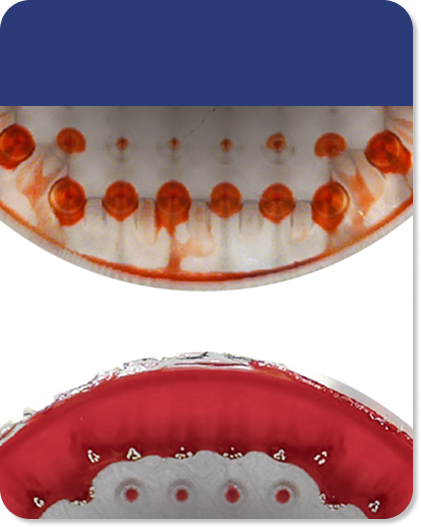
Drug loss from sidewall pooling
Sharp corners promote pooling at patch edges, resulting in substantial formulation loss from the sidewalls.
Limited drug loading in MNs
With a concentrated drug solution, only ~10% of the drug volume is in the needles (confocal 3D reconstruction).
30–70% of total drug in the sidewall

*Vander Straeten, A., et al. (2023). A microneedle vaccine printer for thermostable COVID-19 mRNA vaccines. Nature Biotechnology.
These issues can raise production costs, reduce drug utilization and affect delivery consistency—challenges for microneedle R&D, regulatory approval and manufacturing.
How have these issues been addressed?
Approaches used in research and industry include:
These approaches can add process complexity
or require specialized equipment.

A solution inspired by nature
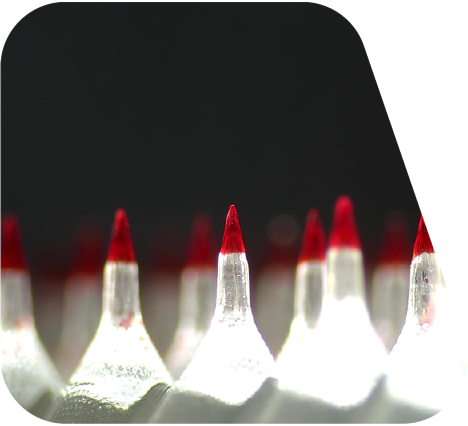
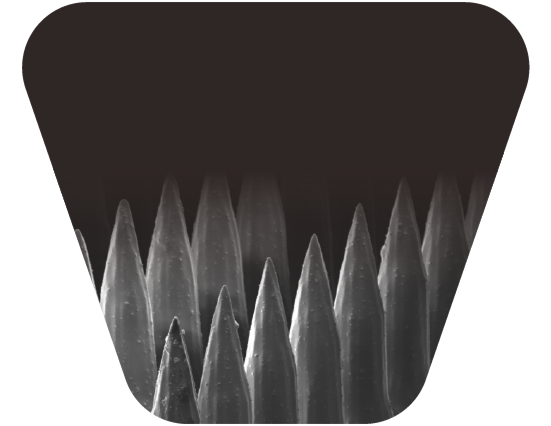
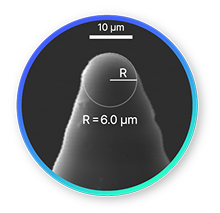
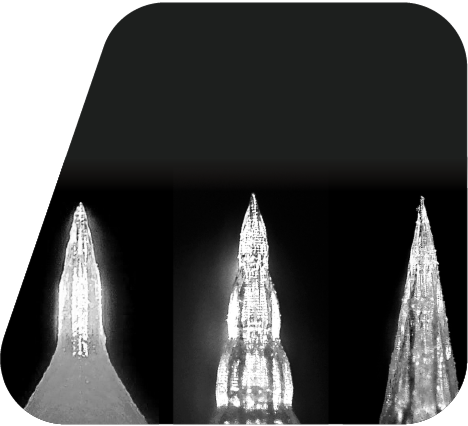
MicronCube developed UniCaptiX™ technology, inspired by the microstructure of rose petals, to address key challenges of conventional microneedle molding.
The mold architecture guides the drug formulation toward the microneedle cavities while maintaining liquid continuity between cavities, thereby promoting more uniform filling across microneedle array.


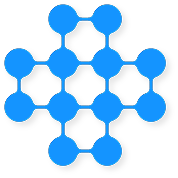
Technology

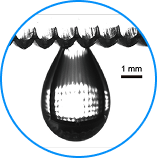
Fluid continuity between cavities
promotes more uniform filling across the array
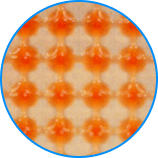
Bioinspired surface geometry promotes
formulation retention around MN cavities
Controlled wetting helps
reduce sidewall pooling

Top-view comparison of two molds during formulation drying.
Red indicates the drug-containing formulation.
See how a microneedle patch takes shape, from mold to patch.
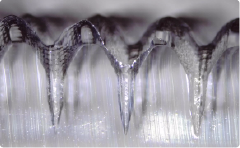
01 Mold
Cross-section of a precision mold with bioinspired design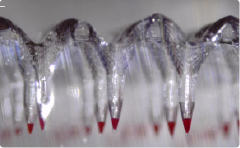
02 Cast & dry
Model formulation cast into the needle cavities.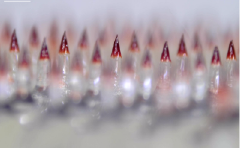
03 Demold
The finished microneedle patchOrder these products from the MicronCube Store.
Online store: Korea only · International orders: Contact Us

MicronCube Store
Explore the store · Orders within Korea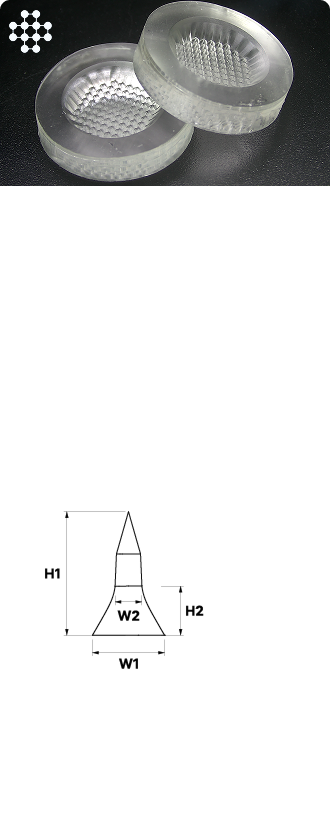
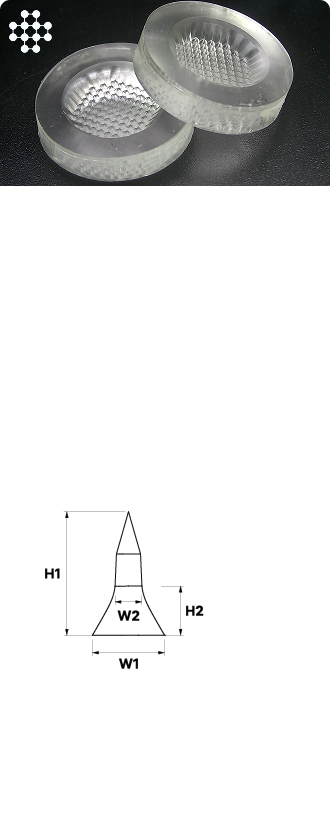
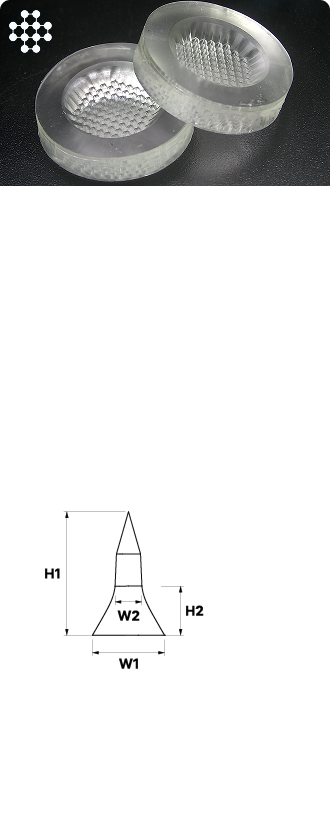
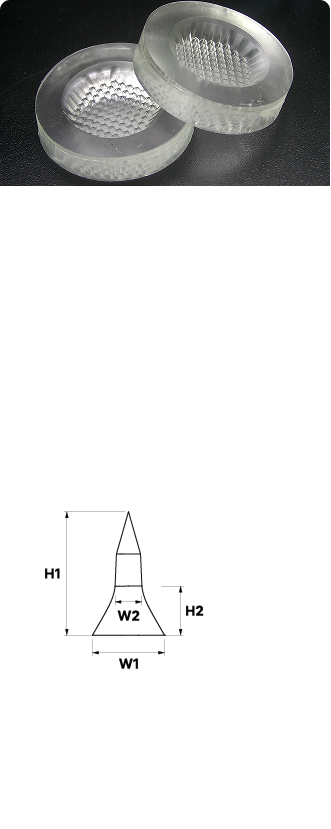
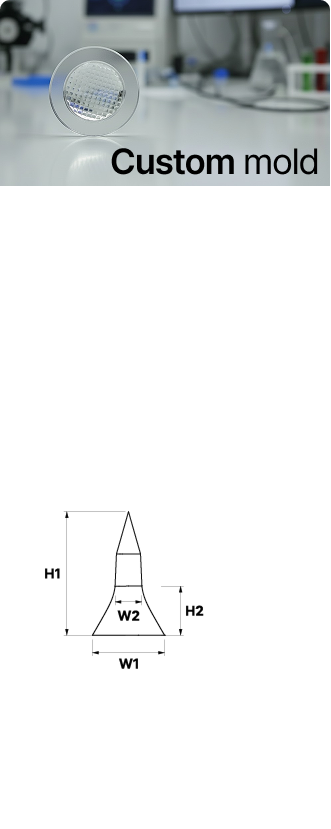
Custom microneedle molds, shaped around your research
Explore your design in Warp Studio™, then request a custom mold.

MicronCube collects and uses the following information to respond to inquiries (Personal Information Protection Act, Article 15(1), items 4 and 6).
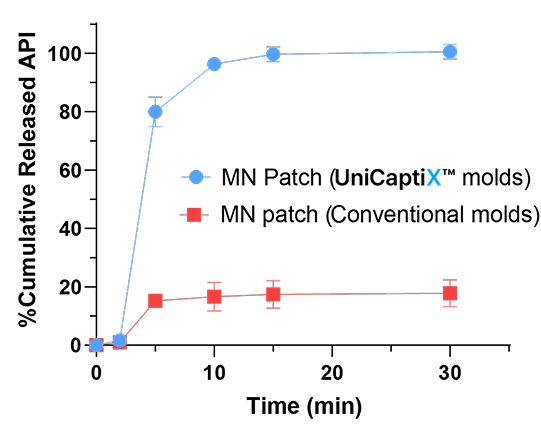
· Patch formulation: 20 μg salmon sperm DNA + 200 μg PVA/sucrose-based excipients. Identical solutions were dispensed into UniCaptiX™ and conventional molds, then dried and evaluated under the same conditions.
· Test conditions: A modified hermetic-pouch method was used. Patches were inserted through Parafilm and heat-sealed so that only the needles contacted the release medium. Testing was performed at 75 rpm and 32 °C. DNA was quantified according to the manufacturer’s PicoGreen assay kit instructions (Thermo Fisher). Reference: Larrañeta, E., et al. (2016). A facile system to evaluate in vitro drug release from dissolving microneedle arrays. International Journal of Pharmaceutics.
· These data compare molds under identical manufacturing conditions. Actual performance may vary with formulation, manufacturing conditions and manufacturing conditions.
· Results are from ongoing development and are subject to change.